
Flashback: Cooper Street's Female Physicians
Sophia Presley (c.1838-1909) became one of the first women to establish a longstanding medical practice in Camden the early 1880s. For nearly three decades while maintaining her private practice, she also treated patients in charitable institutions and helped lead a movement to create public parks in Camden. She broke a barrier by overcoming the resistance of male colleagues to be admitted to membership in the Camden County Medical Society.
Born in Ireland, Presley immigrated to the United States at the age of 11. She arrived in New York in 1849 with her parents and two siblings, part of the wave of Irish immigrants who escaped the potato famine in Ireland. They settled in Ohio, where her father found work in a glass factory.
After her mother died in 1856, Presley gained an education at the Granville (Ohio) Female Seminary. She then earned a living as a teacher in private academies in Ohio and Indiana, but by 1876 a desire to study medicine brought her east to Philadelphia. She enrolled at the Woman’s Medical College of Pennsylvania and graduated with the class of 1879.
Presley became an instructor of surgery at Woman’s Medical College while joining the staff of the Woman’s Hospital of Philadelphia. While holding those positions, by 1880 she moved to Camden to fill a need for a female physician. (The city briefly had another female physician, Hettie K. Painter, in the early 1860s, but she left during the Civil War to care for wounded soldiers and did not return. Another female doctor, Anna E. Griffith, arrived in Camden around the same time as Presley and established her practice on Fourth Street.)
Fellow doctors in Camden later recalled that Presley encountered “strong prejudice in employing a female physician, yet by her earnest zeal and ability she soon had the confidence of many of our prominent families and secured a large clientele under adverse circumstances.” She also had to overcome prejudices within the all-male Camden County Medical Society, which rejected her application for membership annually beginning in 1883. Finally, a unanimous endorsement by Camden city physicians pushed the county society to relent and accept her in 1890.
During her years of private practice, Presley also served as a physician for African American children at the West Jersey Orphanage, for aged patients at the Methodist Episcopal Home, and for indigent patients at the Camden Dispensary. She reported on cases and treatments in medical papers and spoke to local organizations on topics like emergency medicine and child care. During the 1890s, she was among the leaders of the Women’s Parks Association, where she argued for the health benefits of public parks.
Presley moved frequently as she rented rooms for her home and office. She lived and worked on Cooper Street twice, in 1885 at 302 Cooper Street (still standing, privately owned) and for seven years, from 1889-96, at 405 Cooper Street (now the home of the Rutgers—Camden Department of Sociology, Anthropology, and Criminal Justice). She also lived at several other addresses within the current footprint of the Rutgers—Camden campus on North Third Street, North Fourth Street, and Penn Street. In her later years, she purchased a home at 333 N. Seventh Street, which was later demolished for construction of the Benjamin Franklin Bridge.
Sophia Presley died from heart disease in 1909. By that time, Camden had four female physicians to serve as honorary pallbearers as she was buried in Harleigh Cemetery.
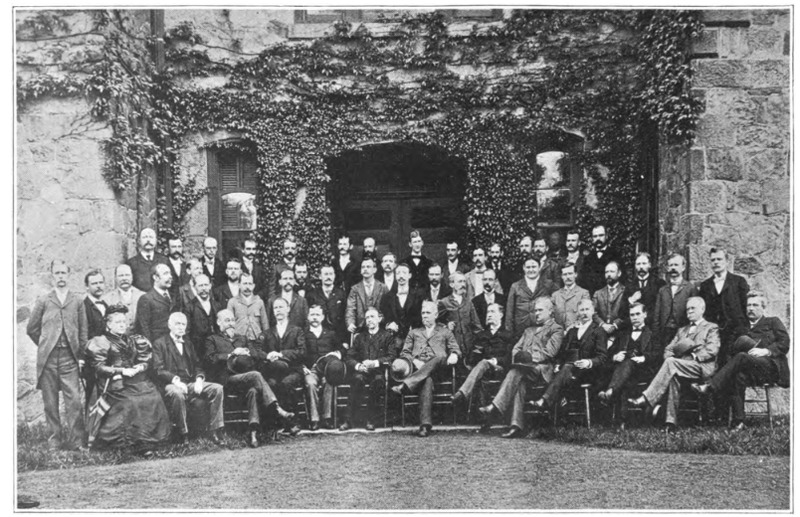
Sophia Presley, front row at left, with the Camden County Medical Society in 1896. (Report of the Celebration of the Fiftieth Anniversary of the Camden District Medical Society)
Lettie Allen Ward (1859-1939), a lifelong resident of Camden, pursued a career in teaching before resigning in 1894 to enroll at the Woman's Medical College of Pennsylvania. A nose and throat specialist, she also provided expert testimony in court trials, offered “well baby” clinics at the Camden Dispensary, and joined in the movement for public parks. In the 1920s, she helped to found the Camden County Woman’s Business and Professional Club and served as its president for two years.
Ward was the daughter of Aaron Ward, a carpenter and Civil War veteran, and Anna Ward. During the war, Lettie, her mother, and a younger brother lived at 432 Lawrence Street (within the Rutgers—Camden footprint but no longer standing). The family moved frequently during her early childhood, including two years at 424 N. Third Street (currently the block of the Rutgers--Camden Athletic and Fitness Center).
After graduating from Woman’s Medical College in 1898, Ward also taught courses there in medicine and surgery, pediatrics, and anatomy. Meanwhile, she established her practice on Broadway several blocks south of Cooper Hospital. She relocated to Cooper Street in the 1920s, but her first Cooper Street home and office, in the 600 block, stood in the path of construction for approaches to the Benjamin Franklin Bridge. In 1924 she moved and purchased 325 Cooper Street (still standing, the home of the Mid-Atlantic Regional Humanities Center at Rutgers—Camden).
Lettie Allen Ward died from pneumonia in 1939 and is buried in Harleigh Cemetery.

Lettie Ward, seated at left, studies anatomy at Woman's Medical College of Pennsylvania. (Legacy Center Archives, Drexel University College of Medicine)
Elise Whitlock-Rose (1875-1961) did not practice medicine in Camden, but she grew up at 401-03 Cooper Street (currently home to the Rutgers—Camden Departments of Political Science and Public Policy). Rose devoted her medical career to a clinic that she co-founded in West Philadelphia and raised funds for war relief in France during World War I and World War II.
Whitlock-Rose’s parents, banker Wilbur F. Rose and Mary Whitlock Rose, purchased the home at Fourth and Cooper Streets in 1888, when Elise (also known as Elsie) was 13 years old. With her mother, a prominent social reformer and woman’s club activist, Elise had the opportunity to travel in the United States and Europe. Meanwhile, at the Springside boarding school in Philadelphia’s Chestnut Hill section, she acquired fluency in French and a passion for French culture and history. After her school days she channeled this interest into writing a series of books about cathedrals and cloisters of France, researched in Europe and published between 1906 and 1914.
After the death of her mother in 1907, Elise Whitlock-Rose enrolled in the Woman’s Medical College of Pennsylvania and completed her M.D. degree in 1914. By 1916, she and her father moved to Philadelphia.
With another Woman’s Medical College graduate, Elizabeth F.C. Clark, Rose opened a clinic in West Philadelphia to serve underprivileged women and children, the Clinic of Notre Dame des Malades (Our Lady of the Sick). The clinic served patients for more than 30 years. Following the outbreak of World War I, which occurred while she was traveling in Europe with her father, Elise also sought to aid France by starting a war relief agency, which she called the Little House of Saint Pantaleon. She revived it in 1939 to help France at the start of World War II.
Elise Whitlock-Rose died of heart failure in 1961 and is buried in the Atlantic City Cemetery, where she shares a headstone with her longtime partner, Elizabeth F.C. Clark, who died in 1949.

Camden Daily Courier, June 14, 1914.
Precedent: Hettie K. Painter (1820-89)
Sophia Presley is typically regarded as one of Camden’s first female physicians, but a generation earlier another woman with a medical degree briefly lived in the city before departing to treat wounded soldiers during the Civil War. From around 1858 until 1861, Dr. Hettie K. Painter lived with her husband and one of their two sons on Second Street just north of today’s Benjamin Franklin Bridge.
Hettie (given name Esther Kersey) was born in Philadelphia but adopted by relatives in Chester County, Pennsylvania, after the death of her parents. She married another Chester County resident, Joseph H. Painter, and together they moved to Ohio and became active in the anti-slavery and women’s rights movements.
Returning east in the late 1850s, Hettie Painter enrolled at the Penn Medical University, a two-year medical college in Philadelphia. She and her family settled in Camden. After completing her M.D. degree in 1860, she placed advertisements inviting “afflicted females” to come to her at 520 N. Second Street. Her methods may have included treating conditions with electrical currents, which were the subject of her medical school thesis.
Dr. Painter was in her 40s at the time of the Civil War, and she immediately offered her services. Her treatment of wounded soldiers at the first battle of Bull Run attracted notice by General Philip Kearny, who asked her to return. Regarded by the Army as a nurse rather than a doctor, she nevertheless was commissioned as a state agent for New Jersey and Pennsylvania to supervise field hospitals in Virginia, Maryland, and Washington, D.C. Her meritorious service led Congress to grant her the belated honor of a pension in 1887.
After the Civil War, the Painters followed their sons west, eventually settling in Lincoln, Nebraska. There, Dr. Painter established the Lincoln Infirmary, a home for expectant mothers and patients with chronic diseases. She practiced in Lincoln until her death in 1889.
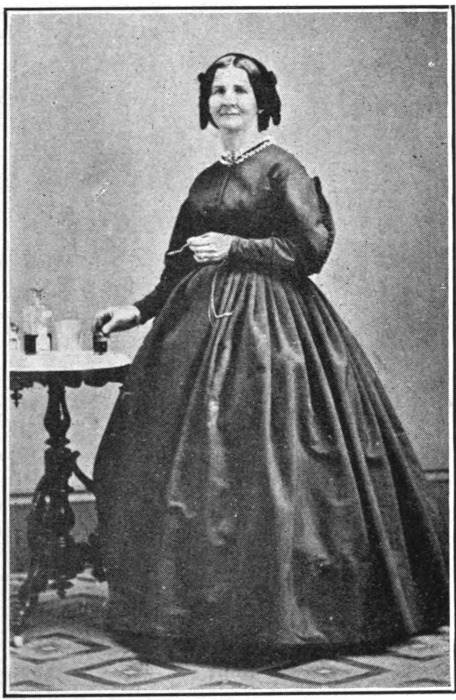
Dr. Hettie K. Painter. (Reminiscences of an Army Nurse, by Adelaide W. Smith, 1911)
-- By Charlene Mires, posted September 21, 2026.
Research by Rachel Craft, Lucy Davis, and Charlene Mires.
Sources
Camden and Philadelphia newspapers (Newspapers.com).
Camden City Directories (Ancestry.com).
Griep, Mark. "Remember Me: Dr. Hettie K. Painter's Collection of Civil War Era Photos of New Jersey Volunteers." NJS: An Interdisciplinary Journal (Winter 2026): 158-90.
Hunter, Geraldine R. "Grace Under Pressure: The First Women to Join the County Medical Societies of New Jersey." New Jersey Medicine vol. 87, no. 3 (March 1990): 187-230.
Journal of the Medical Society of New Jersey.
Neuverth, Grant, Effie Athanassopoulos, and Mark Griep. "Dr. Hettie Kersey Painter: A Nineteenth Century Pioneering Female Physician and the Lincoln Infirmary." Nebraska History vol 106, No 1 (Spring 2025), 28-43.
Smith, Adelaide W. Reminiscences of an Army Nurse during the Civil War. New York: Greaves Publishing Company, 1911.
U.S. Census and New Jersey Census (Ancestry.com).
Cite: Charlene Mires, "Cooper Street's Female Physicians," Learning From Cooper Street, https://onlineexhibits.camden.rutgers.edu/s/cooper-street/page/femalemds.