A variety of unlabeled medicinal bottles were discovered in the Cooper Street dig, including this small glass bottle. It could have held a number of liquids used to heal a number of ailments. It would have been kept with others of its kind in the household, used when a family member was taken ill.
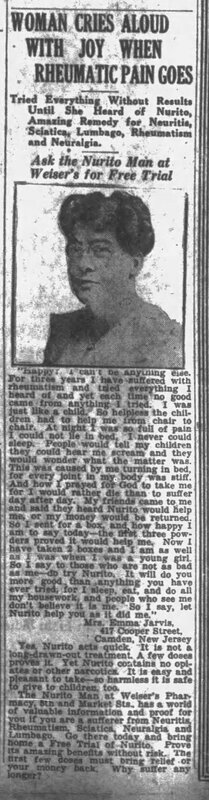
Mothers in the late nineteenth century used Mrs. Winslow’s Soothing Syrup, made by Curtis & Perkins of Bangor, Maine, to ease their babies’ teething pain and other ailments. It lived up to its name, soothing distressed children into a peaceful sleep, a far cry from the painful medical practices of the era. Composed of a high dose of morphine dissolved in grain alcohol, the product caused many infant deaths throughout its lifespan. A series of federal laws passed in the early twentieth century forced a reformulation. Stripped of intoxicating qualities and increasingly obsolete in an age of “scientific” child-rearing, it was quietly withdrawn from the market around 1920.
Throughout the nineteenth century, entrepreneurs sold their own pharmaceutical concoctions without regulation. This was the business of proprietary medicine. This bottle likely contained pharmaceutical products or flavoring extract which was made using narcotics such as morphine or cocaine as the chief ingredient. The original contents of this bottle can still be seen inside, they are however, a mystery. This bottle is a mouth blown, mold pressed glass bottle. Bottles like this were mass-produced at glass factories like Whitall Tatum & Co. and Wheaton Industries in Millville, N.J., and shipped all over the United States.
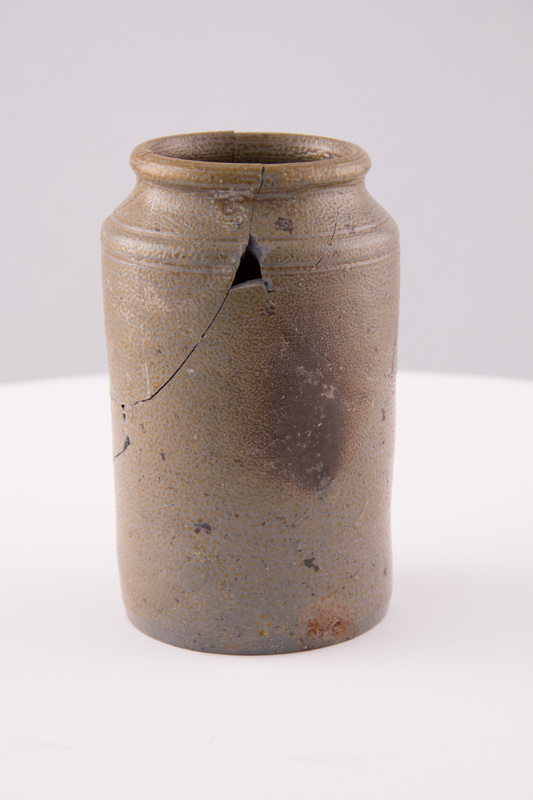
Salt-glazed earthware jars replaced lead-glazed vessels for food storage as the dangers of lead became common knowledge. Once filled, treated paper or cloth formed a seal over the open mouth. Cookbooks in the nineteenth century recommended these jars for pickling.
Henry Stiegel’s distinctive thin-walled drinking glasses became popular in the Philadelphia area after his emigration from Germany in 1750. His technique spread to other glasshouses after his death. Pieces in the style were sometimes produced at the Kensington Glass Works in Philadelphia.
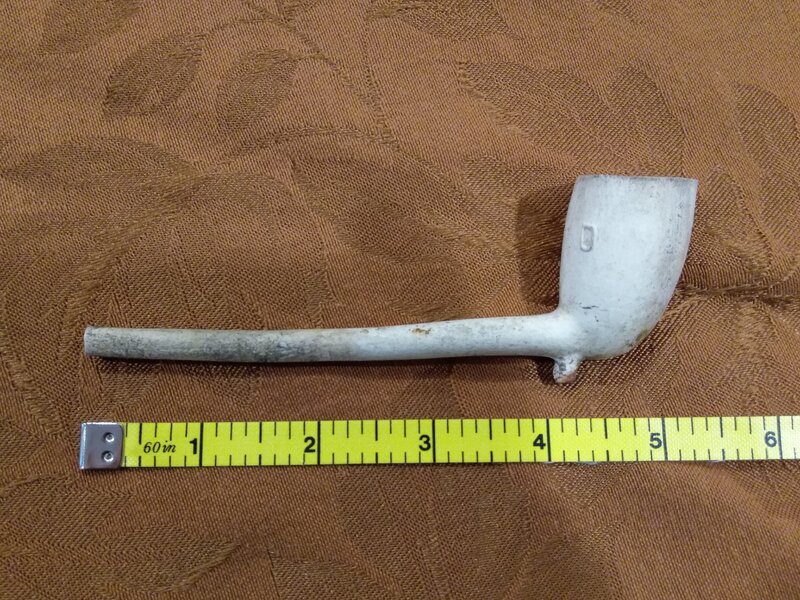
Both men and women enjoyed the sweet flavors and the soothing properties of tobacco through white ball clay pipes. Clay smoking pipes are some of the first mass-produced items. Because of this mass production, clay pipes served as an affordable alternative to those who could not afford the more expensive options made of brier wood or meerschaum. Serving as a cheap way to enjoy the pleasures of tobacco, factory workers purchased these pipes one or two at a time. After a couple bowls of tobacco, the pipes would be thrown away.
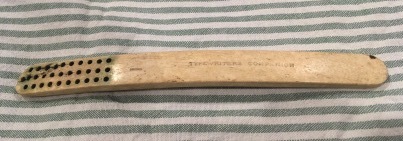
Typewriter manufacturing companies of the early twentieth century often paired the machines with a manual and a cleaning kit, providing consumers with two cleaning brushes, an oil can, and a small screwdriver. This "Typewriters Companion" dusting brush, made in France, would have been paired with a shorter, stiff-bristled brush that was used first to remove the hardened grime from between the type keys. The dusting brush was typically used after the type brush to wiping the typewriter clean of loosened dirt and dust without harming it. The handle was originally threaded with horsehair bristles, creating a much softer surface than the wire bristles of its partner, the type brush. With its long, curved handle and its wide set of soft bristles, the Typewriters Companion played a significant role in maintaining typewriters in the early twentieth century.
Both men and women enjoyed the sweet flavors and the soothing properties of tobacco through white ball clay pipes. Clay smoking pipes are some of the first mass-produced items. Because of this mass production, clay pipes served as an affordable alternative to those who could not afford the more expensive options made of brier wood or meerschaum. Serving as a cheap way to enjoy the pleasures of tobacco, factory workers purchased these pipes one or two at a time. After a couple bowls of tobacco, the pipes would be thrown away.
White granite became a popular choice for dinnerware in the mid-nineteenth century because it had the appearance of porcelain but was less expensive and more durable. Pieces were often decorated with natural motifs.
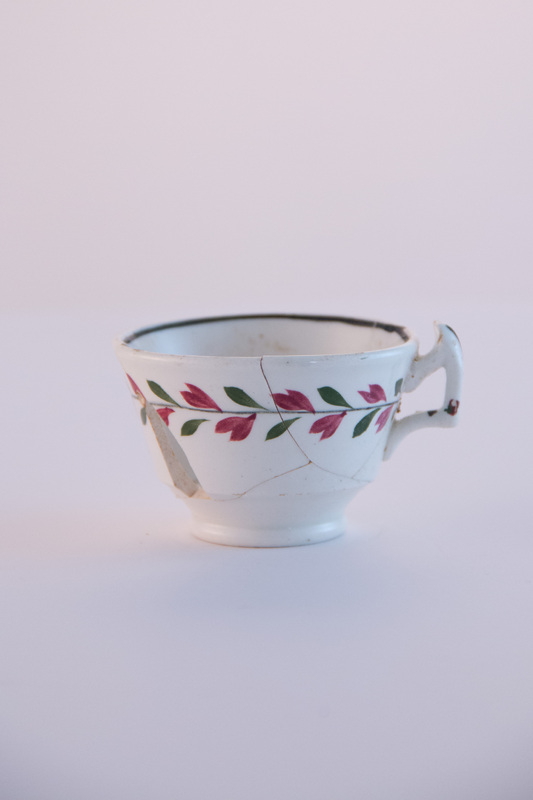
London shape, chrome-painted whiteware tea cups were commonly imported into the United States. The flower vine pattern was commonly seen on nineteenth-century whiteware.
The “Willow” pattern of this teaware piece imitates the designs used on Chinese porcelain that became popular imports in the nineteenth century. A number of American firms utilized the pattern or a variation of it in their designs.
The “Willow” pattern of this teaware piece imitates the designs used on Chinese porcelain that became popular imports in the nineteenth century. A number of American firms utilized the pattern or a variation of it in their designs.