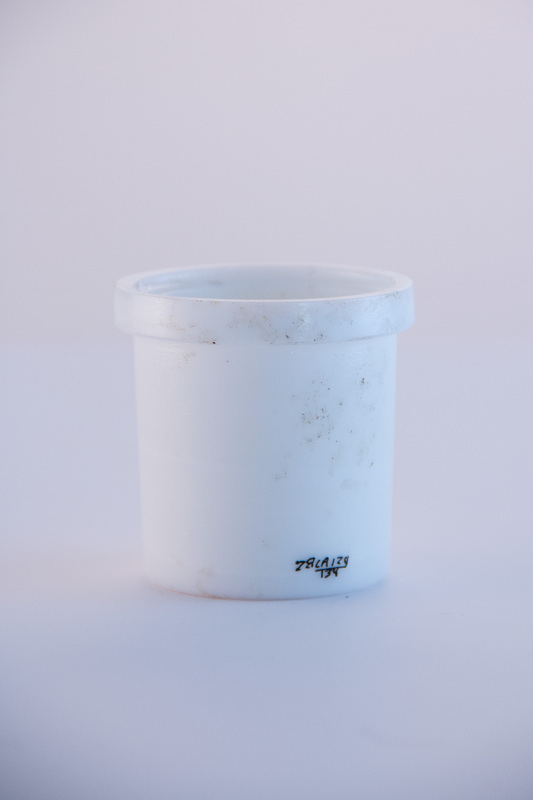
Discovered alongside many other items of its kind, this object was identified as a food preparation and storage vessel. Its circular base and wide open top suggests that it was used for preparation over storage - it was not found with an airtight lid like those of other storage vessels. Its lack of ornamental design suggests a focus on function over aesthetic value and furthers the notion that this object was used for every day duties in the kitchen.
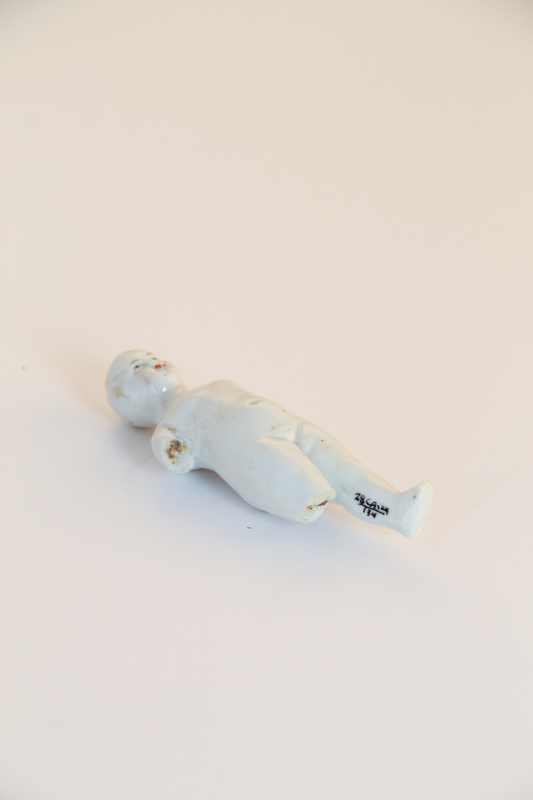
Inspired by the cautionary tale “Fair Charlotte,” in which a young woman froze to death after refusing her mother's advice to dress warmly for a sleigh ride, this German-made china doll was created as a bathing toy for young children in the late nineteenth century. The dolls stood anywhere from 1/4 inch to 5 inches, often with painted-on faces and hair. They were could also be baked into cakes or displayed in miniature coffins in the home.
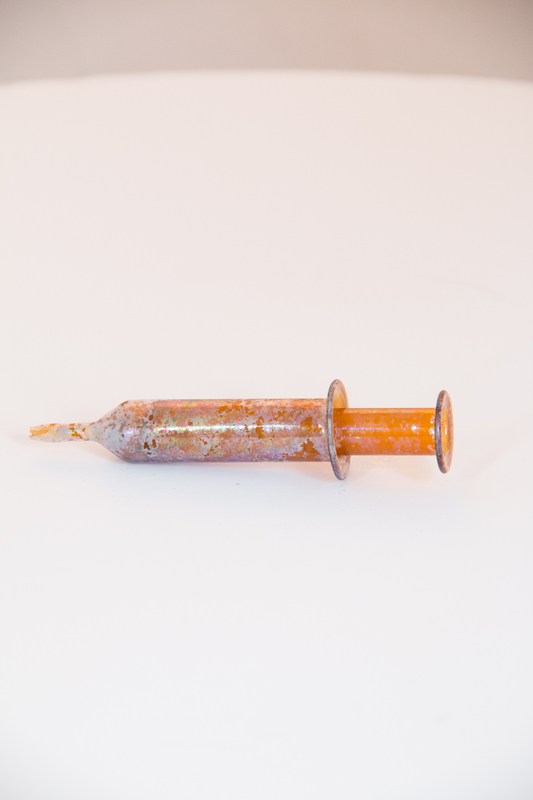
In the second half of the nineteenth century and the early part of the twentieth century, doctors and patients at home relied on glass syringes to treat various conditions, including venereal diseases. Unlike hypodermic needles, these artifacts, also called “male” syringes, did not inject medicine subcutaneously. Instead, these syringes irrigated or flushed the visibly infected parts of the body. The “male” syringe entered the tip of the penis to flush the symptoms from the urethra. In addition to the discomfort, these treatments failed to cure the venereal diseases and only masked the symptoms for periods of time.
Sugar boxes held sugar to sweeten tea and coffee or to make unpalatable wine drinkable. This nearly-intact pearlware example from the early 1800s has a hand-painted garland design.
A product of the Consolidated Fruit Jar Company in late 1870s, this Mason’s Improved Jar proved to be popular and accessible to many people in the nineteenth and twentieth centuries. A common household item, the jar helped housewives during the time-consuming process of canning and changed the way people viewed food preservation. The storage and protection these jars provided helped mothers achieve their goals of maintaining a healthy household. These jars were mass produced until the twentieth century, which causes their abundance today.
The inventor of the Mason jar, John Landis Mason, was born in Vineland, N.J., in 1832. He patented his jar in 1858.