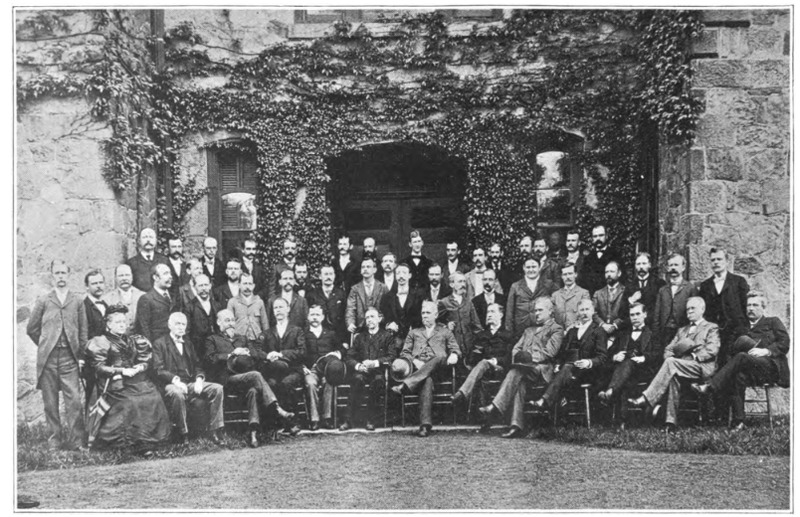
Lettie Allen Ward (at left) studying anatomy at the Woman's Medical College of Pennsylvania. (Legacy Center Archives, Drexel University College of Medicine)
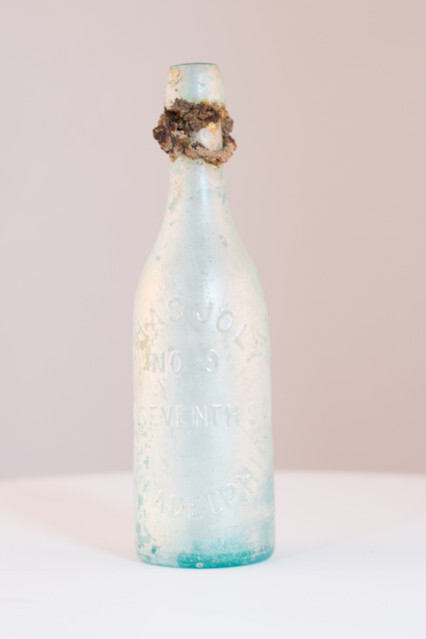
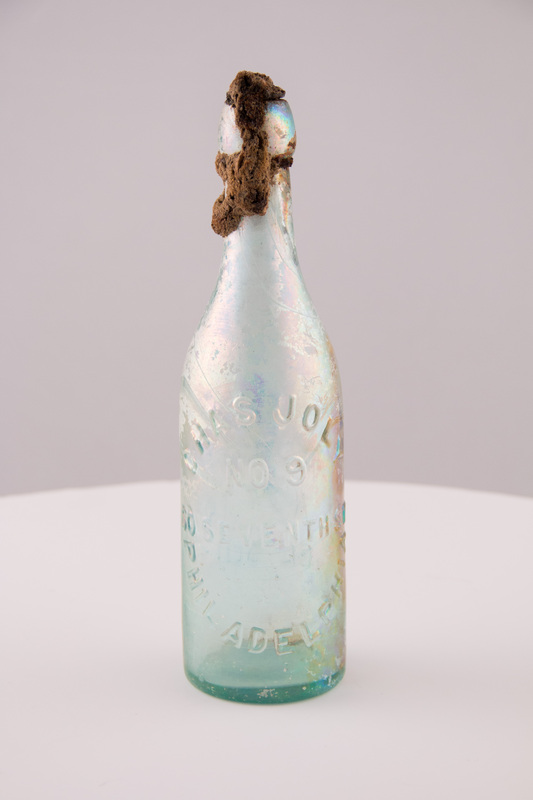
This bottle was used to sell and distribute beer by Charles Joly, a bottler at 9 Seventh Street in Philadelphia. Consumers paid for the beer, but not the bottle. Beer drinkers would return the bottles to the brewer or take the bottles back to get them refilled.
The painted features of this porcelain doll face point to the work of firms in the Thuringia area of Germany. Thuringia’s natural clay deposits made it the center of the German doll industry. This doll likely once included glass enamel eyes and a mohair wig.
Students, almshouse residents, and homemakers all crafted buttons out of cleaned cow bones. The carving required few tools and little skill. The incomplete button blank on the center of this board still shows a fragment of the larger bone from which it was carved.
Three Charles Joly beer bottles were uncovered during the Cooper Street dig. The bottle not only represents the growth of beer production in the United States, it also shows how the nation was expanding with new innovations that allowed for the transportation of perishable items by rail with the use of refrigerated box cars.
Straight pins filled a number of needs in the nineteenth-century household. Women used them to sew clothes and fasten baby diapers, and men used them to fasten documents before the invention of the staple. The thimble protected the pointer finger from needle injuries while sewing.
This jar likely held cosmetics, such as a cold cream or powder. Despite missing its lid, this container still reveals details about Cooper Street’s residents. The existence of cosmetics at home suggests the means to purchase a luxury and the leisure opportunities for wearing makeup.