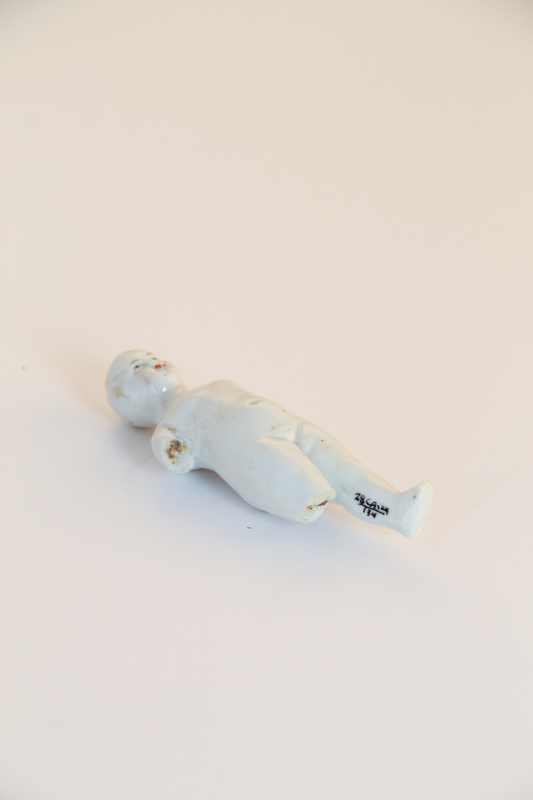
The painted features of this porcelain doll face point to the work of firms in the Thuringia area of Germany. Thuringia’s natural clay deposits made it the center of the German doll industry. This doll likely once included glass enamel eyes and a mohair wig.
Students, almshouse residents, and homemakers all crafted buttons out of cleaned cow bones. The carving required few tools and little skill. The incomplete button blank on the center of this board still shows a fragment of the larger bone from which it was carved.
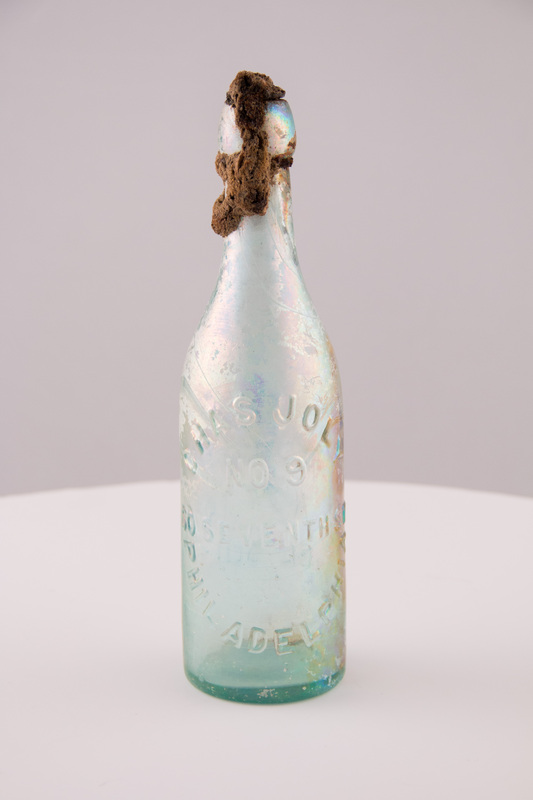
Three Charles Joly beer bottles were uncovered during the Cooper Street dig. The bottle not only represents the growth of beer production in the United States, it also shows how the nation was expanding with new innovations that allowed for the transportation of perishable items by rail with the use of refrigerated box cars.
Straight pins filled a number of needs in the nineteenth-century household. Women used them to sew clothes and fasten baby diapers, and men used them to fasten documents before the invention of the staple. The thimble protected the pointer finger from needle injuries while sewing.
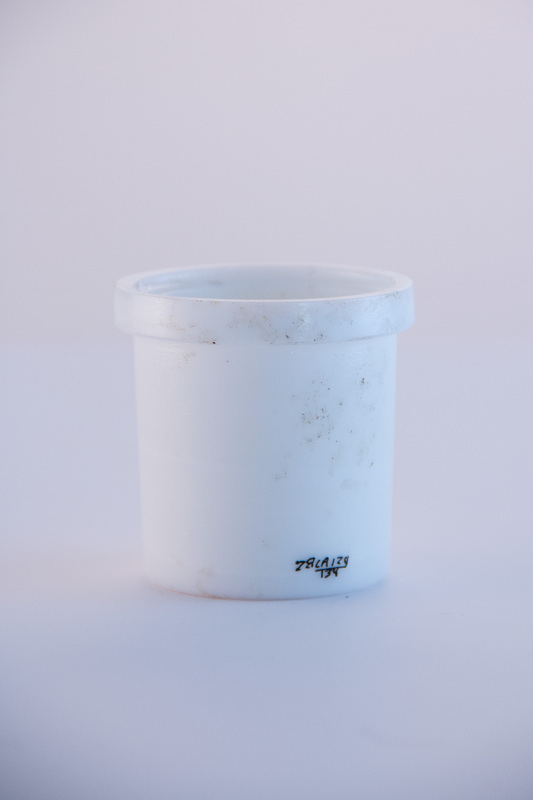
Discovered alongside many other items of its kind, this object was identified as a food preparation and storage vessel. Its circular base and wide open top suggests that it was used for preparation over storage - it was not found with an airtight lid like those of other storage vessels. Its lack of ornamental design suggests a focus on function over aesthetic value and furthers the notion that this object was used for every day duties in the kitchen.
Inspired by the cautionary tale “Fair Charlotte,” in which a young woman froze to death after refusing her mother's advice to dress warmly for a sleigh ride, this German-made china doll was created as a bathing toy for young children in the late nineteenth century. The dolls stood anywhere from 1/4 inch to 5 inches, often with painted-on faces and hair. They were could also be baked into cakes or displayed in miniature coffins in the home.
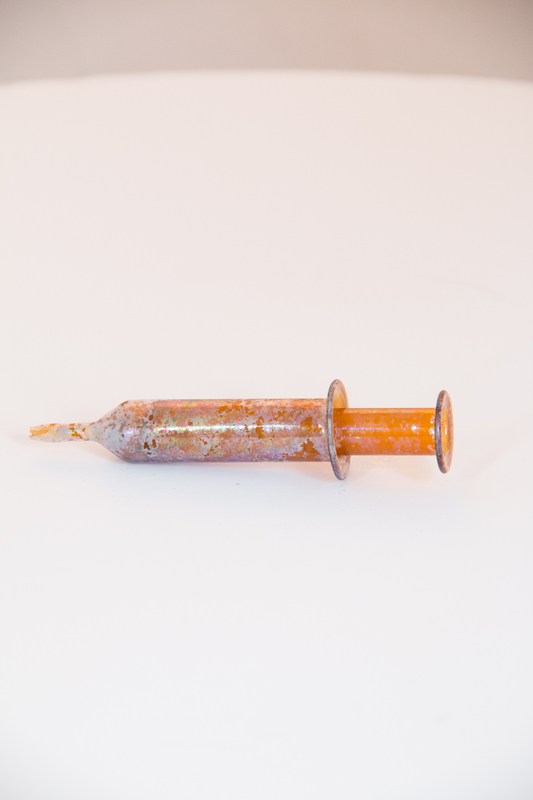
In the second half of the nineteenth century and the early part of the twentieth century, doctors and patients at home relied on glass syringes to treat various conditions, including venereal diseases. Unlike hypodermic needles, these artifacts, also called “male” syringes, did not inject medicine subcutaneously. Instead, these syringes irrigated or flushed the visibly infected parts of the body. The “male” syringe entered the tip of the penis to flush the symptoms from the urethra. In addition to the discomfort, these treatments failed to cure the venereal diseases and only masked the symptoms for periods of time.
Sugar boxes held sugar to sweeten tea and coffee or to make unpalatable wine drinkable. This nearly-intact pearlware example from the early 1800s has a hand-painted garland design.
A product of the Consolidated Fruit Jar Company in late 1870s, this Mason’s Improved Jar proved to be popular and accessible to many people in the nineteenth and twentieth centuries. A common household item, the jar helped housewives during the time-consuming process of canning and changed the way people viewed food preservation. The storage and protection these jars provided helped mothers achieve their goals of maintaining a healthy household. These jars were mass produced until the twentieth century, which causes their abundance today.
The inventor of the Mason jar, John Landis Mason, was born in Vineland, N.J., in 1832. He patented his jar in 1858.
A variety of unlabeled medicinal bottles were discovered in the Cooper Street dig, including this small glass bottle. It could have held a number of liquids used to heal a number of ailments. It would have been kept with others of its kind in the household, used when a family member was taken ill.
Mothers in the late nineteenth century used Mrs. Winslow’s Soothing Syrup, made by Curtis & Perkins of Bangor, Maine, to ease their babies’ teething pain and other ailments. It lived up to its name, soothing distressed children into a peaceful sleep, a far cry from the painful medical practices of the era. Composed of a high dose of morphine dissolved in grain alcohol, the product caused many infant deaths throughout its lifespan. A series of federal laws passed in the early twentieth century forced a reformulation. Stripped of intoxicating qualities and increasingly obsolete in an age of “scientific” child-rearing, it was quietly withdrawn from the market around 1920.
Throughout the nineteenth century, entrepreneurs sold their own pharmaceutical concoctions without regulation. This was the business of proprietary medicine. This bottle likely contained pharmaceutical products or flavoring extract which was made using narcotics such as morphine or cocaine as the chief ingredient. The original contents of this bottle can still be seen inside, they are however, a mystery. This bottle is a mouth blown, mold pressed glass bottle. Bottles like this were mass-produced at glass factories like Whitall Tatum & Co. and Wheaton Industries in Millville, N.J., and shipped all over the United States.
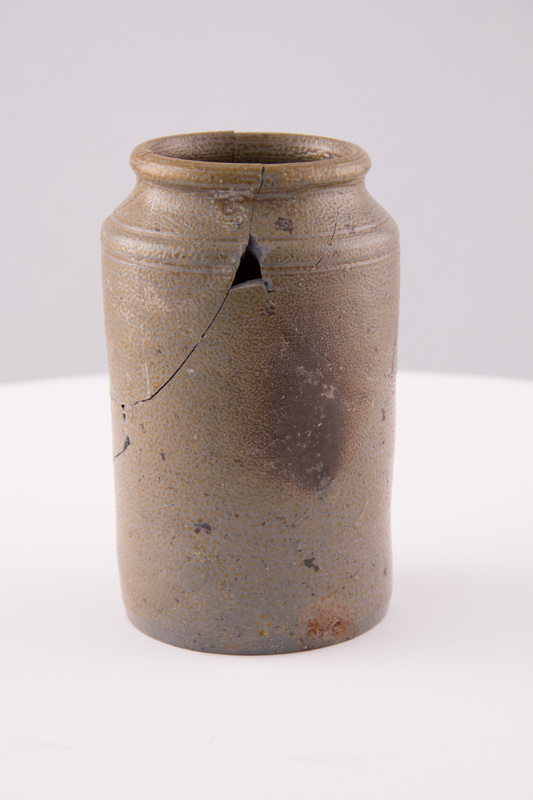
Salt-glazed earthware jars replaced lead-glazed vessels for food storage as the dangers of lead became common knowledge. Once filled, treated paper or cloth formed a seal over the open mouth. Cookbooks in the nineteenth century recommended these jars for pickling.
Henry Stiegel’s distinctive thin-walled drinking glasses became popular in the Philadelphia area after his emigration from Germany in 1750. His technique spread to other glasshouses after his death. Pieces in the style were sometimes produced at the Kensington Glass Works in Philadelphia.
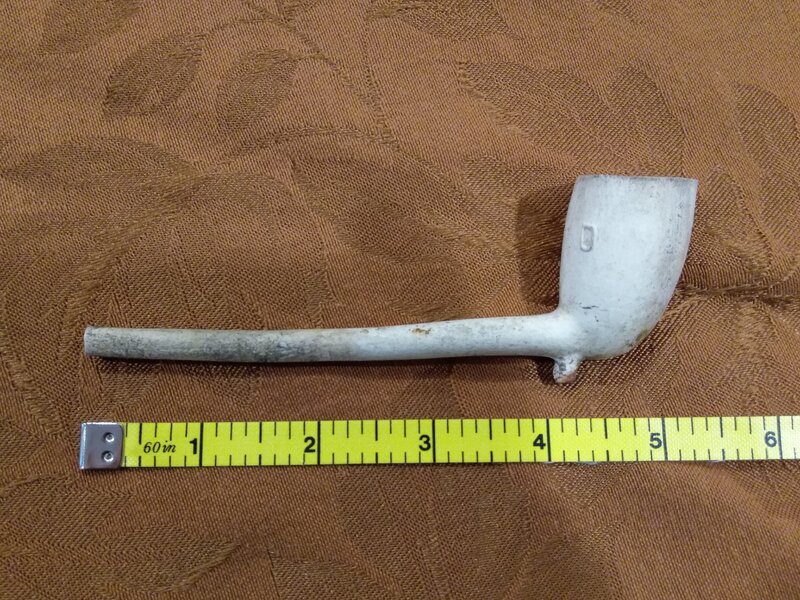
Both men and women enjoyed the sweet flavors and the soothing properties of tobacco through white ball clay pipes. Clay smoking pipes are some of the first mass-produced items. Because of this mass production, clay pipes served as an affordable alternative to those who could not afford the more expensive options made of brier wood or meerschaum. Serving as a cheap way to enjoy the pleasures of tobacco, factory workers purchased these pipes one or two at a time. After a couple bowls of tobacco, the pipes would be thrown away.
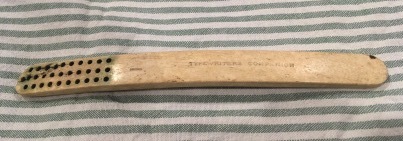
Typewriter manufacturing companies of the early twentieth century often paired the machines with a manual and a cleaning kit, providing consumers with two cleaning brushes, an oil can, and a small screwdriver. This "Typewriters Companion" dusting brush, made in France, would have been paired with a shorter, stiff-bristled brush that was used first to remove the hardened grime from between the type keys. The dusting brush was typically used after the type brush to wiping the typewriter clean of loosened dirt and dust without harming it. The handle was originally threaded with horsehair bristles, creating a much softer surface than the wire bristles of its partner, the type brush. With its long, curved handle and its wide set of soft bristles, the Typewriters Companion played a significant role in maintaining typewriters in the early twentieth century.
Both men and women enjoyed the sweet flavors and the soothing properties of tobacco through white ball clay pipes. Clay smoking pipes are some of the first mass-produced items. Because of this mass production, clay pipes served as an affordable alternative to those who could not afford the more expensive options made of brier wood or meerschaum. Serving as a cheap way to enjoy the pleasures of tobacco, factory workers purchased these pipes one or two at a time. After a couple bowls of tobacco, the pipes would be thrown away.
White granite became a popular choice for dinnerware in the mid-nineteenth century because it had the appearance of porcelain but was less expensive and more durable. Pieces were often decorated with natural motifs.
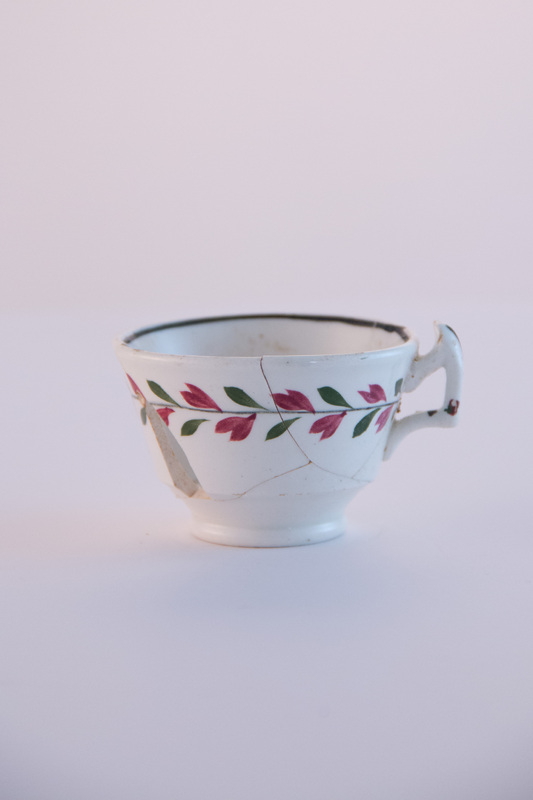
London shape, chrome-painted whiteware tea cups were commonly imported into the United States. The flower vine pattern was commonly seen on nineteenth-century whiteware.
The “Willow” pattern of this teaware piece imitates the designs used on Chinese porcelain that became popular imports in the nineteenth century. A number of American firms utilized the pattern or a variation of it in their designs.
The “Willow” pattern of this teaware piece imitates the designs used on Chinese porcelain that became popular imports in the nineteenth century. A number of American firms utilized the pattern or a variation of it in their designs.
American production of yellowware ceramics, named for the yellow hue of the clay used, centered on New Jersey and Pennsylvania. This nearly-complete mug was decorated by trailing bands of darker or lighter clay across the surface as it was worked on a pottery wheel.